
Feeling overwhelmed by nutrition advice? You’re not alone. Many people wonder if they should jump on the latest fad diet or find a more sustainable approach. a personal nutrition plan comes in.
It’s tailored just for you, considering your lifestyle, goals, and even your quirks (we all have them). But let’s be real (sometimes) it’s hard to figure out what’s right in a sea of conflicting information.
Why trust this? Because experts have weighed in, cutting through the noise to bring you solid, science-backed advice. This isn’t about selling some magical solution.
It’s about understanding what your body needs and how to make it work for you, not against you.
Stick around and you’ll learn how to craft a nutrition plan that’s as unique as you are. No more guessing games. You’ll get practical tips and actionable steps to start seeing real, positive changes in your health and wellness.
The Science of You: Why Generic Meal Plans Are Destined to Fail
Ever tried using a map for the wrong city? That’s what generic meal plans feel like for your body. We all hear about the importance of a personal nutrition plan, but what makes it so important?
It’s all about bio-individuality. This concept highlights that each of us is unique (not) just in personality, but in biology. Your genetics, how you metabolize carbs, your metabolic rate, activity level, and even your gut microbiome, all define your nutritional needs.
Let’s break it down. I might thrive on carbs, while you might bloat just looking at a slice of bread. It’s not just genetics; it’s how your body works at a cellular level.
And then there’s the gut microbiome (that) bustling community of bacteria living in your gut. It plays a huge role in digestion and overall health. So, how can a one-size-fits-all diet ever hope to work for everyone?
The psychological angle is just as key. Generic diets often impose restrictions that lead to burnout. You know that feeling when you can’t eat what you love and end up bingeing later?
It’s a common trap. Contrast this with a flexible, tailored plan where you have choices. Suddenly, food isn’t the enemy.
Frustrated by past diets? It’s not your fault. Blame the flawed approach.
For those looking to truly personalize their nutrition journey, check out Meal Prepping 101 Tips Healthy Eating. Understanding your body is key. Tailor your plan, and you’ll see better results.
The 5 Pillars of a Customized Nutrition Plan
Crafting a personal nutrition plan isn’t just about trimming a few pounds. Let’s start with goals. Does “weight loss” sound familiar?
It’s so much more. Think about boosting energy, building muscle, managing that pesky health condition, or even enhancing athletic performance. Different goals?
Different strategies. A cookie-cutter approach won’t cut it here.
How about your lifestyle? Are you a 9-to-5 lawyer, a night-shift nurse, or a stay-at-home parent juggling kids? Each requires a different approach.
We can’t pretend meal prep and dining out are the same for everyone. You need a plan that fits your schedule; anything else is pointless.
Then there’s health history. This is the science part. Food sensitivities, allergies, and hormonal health dictate what you can eat.
Chronic conditions? They demand attention. No two bodies are alike, so why should diets be?
If science had a soulmate, it would be personalization.
Ah, food preferences. You can’t hate what you eat and expect to stick to a plan. Trust me, it won’t last.
We need to consider your cultural foods too. Grandma’s recipes? They belong here.
Enjoyment equals sustainability.
Lastly, the psychological bit. Food isn’t just fuel; it’s emotional. Stress eating can derail you.
Your relationship with food matters. Motivation and mindset play huge roles, and any worthwhile plan will consider these. Have you ever wondered why some plans work while others don’t?
That’s your answer. It’s psychology.
Interested in more tailored approaches? Check out meal plans that align with these principles. Personalization is key, and awareness of these five pillars makes all the difference.
So, are you ready to redefine your approach?
Your Personalized Nutrition Workshop: Get Practical
Ready to customize your eating habits? Let’s dive right in. I’m talking a real, actionable workshop.

No dull lists here. Let’s start with Step 1: Define Your ‘Why’ (And Your ‘What’). This isn’t about vague ideas like “be healthier.” No, write down something concrete.
Want enough energy to play with your kids after work? That’s your goal. It’s real.
It’s personal.
Onto Step 2: Conduct a Lifestyle Audit. Accurate self-assessment is key. Ask yourself, “What does a typical weekday or weekend look like?” Be honest.
How much time can you commit to cooking? 10 minutes? An hour? Remember, understanding your limits helps plan a realistic personal nutrition plan.
Identify them to tackle them.
What’s your biggest nutritional thorn? Afternoon snacking? Maybe late-night cravings?
Step 3: Establish Your Foundational Habits (The 80/20 Approach) is where the magic starts. Forget rigid meal plans. Instead, aim for non-negotiables. Have protein at every meal, include a couple of vegetable servings, and stay hydrated. This isn’t just busywork. These habits create momentum. Less overwhelm, more action. Trust me, you’ll thank yourself later.
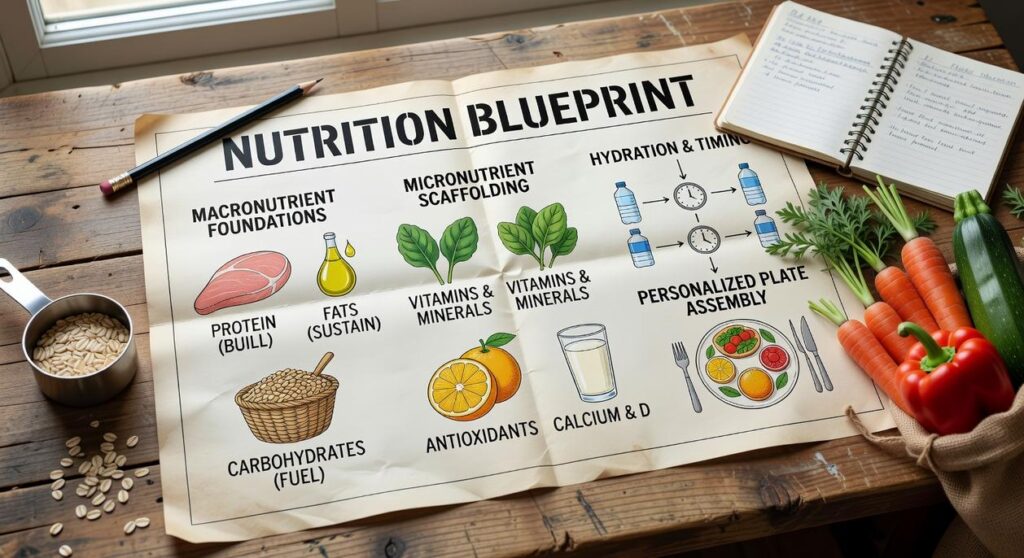
Let’s simplify your meals with Step 4: Create a ‘Go-To’ Meal Template. Think of it as a customizable blueprint: Protein Source + Fiber-Rich Carb + Healthy Fat + Veggies. Use foods you enjoy (that’s) key, not some diet fad.
This formula adapts to breakfast, lunch, and dinner. Need ideas? Eggs, quinoa, avocado, and spinach for breakfast.
Experiment.
Honestly, life isn’t perfect. So, Step 5: Plan for Imperfection. Allow favorite “less-healthy” foods without guilt.
Yes, ice cream has a place. This isn’t a cheat (it’s) life. Balance is important for sticking with it long-term.
Want to integrate more superfoods into your daily diet? This guide can help you sprinkle them into your meals without hassle.
Ultimately, this is about making a personal nutrition plan that’s as unique as you are. The steps are here, but you decide how they fit your life. That’s what makes it personal and sustainable.
So, ready to start? I think it’s time to take the first step.
Beyond the Scale: Progress and Momentum
Ever felt like you’re just spinning your wheels with your health goals? health momentum kicks in. It’s that sense of continuous progress that keeps you moving forward, even when the scale isn’t budging. Forget the number on that scale (look) for those non-scale victories.
More energy, better sleep, clothes fitting differently, a stable mood, and improved gym performance.
Personal nutrition plans should be changing and adapt to life’s unpredictability. Life changes, so why shouldn’t your plan? The simple rule of thumb: assess and tweak every 4-6 weeks.
This keeps your goals aligned with your current situation.
Have you noticed how small changes can lead to big shifts? That’s the real magic. Shift your focus and watch your progress soar.
Take Charge of Your Health Now
You’ve been spinning in circles with those one-size-fits-all diets, right? It’s time to ditch them. A personal nutrition plan is your key.
It’s tailored just for you, considering your unique life, goals, and biology. This is your foundational plan to break free from dieting and embrace a lifestyle that’s sustainable and enjoyable. Don’t wait.
Define your ‘why’ today and step into a healthier future. You’re not just another statistic. You’re you.
Visit our site, explore the resources, and start your personalized journey. You’ve got the power to change your life. Why not start now?

 There is a specific skill involved in explaining something clearly — one that is completely separate from actually knowing the subject. Vorric Eldwain has both. They has spent years working with nutrition and wellness plans in a hands-on capacity, and an equal amount of time figuring out how to translate that experience into writing that people with different backgrounds can actually absorb and use.
Vorric tends to approach complex subjects — Nutrition and Wellness Plans, Workout Recovery Hacks, Health Momentum being good examples — by starting with what the reader already knows, then building outward from there rather than dropping them in the deep end. It sounds like a small thing. In practice it makes a significant difference in whether someone finishes the article or abandons it halfway through. They is also good at knowing when to stop — a surprisingly underrated skill. Some writers bury useful information under so many caveats and qualifications that the point disappears. Vorric knows where the point is and gets there without too many detours.
The practical effect of all this is that people who read Vorric's work tend to come away actually capable of doing something with it. Not just vaguely informed — actually capable. For a writer working in nutrition and wellness plans, that is probably the best possible outcome, and it's the standard Vorric holds they's own work to.
There is a specific skill involved in explaining something clearly — one that is completely separate from actually knowing the subject. Vorric Eldwain has both. They has spent years working with nutrition and wellness plans in a hands-on capacity, and an equal amount of time figuring out how to translate that experience into writing that people with different backgrounds can actually absorb and use.
Vorric tends to approach complex subjects — Nutrition and Wellness Plans, Workout Recovery Hacks, Health Momentum being good examples — by starting with what the reader already knows, then building outward from there rather than dropping them in the deep end. It sounds like a small thing. In practice it makes a significant difference in whether someone finishes the article or abandons it halfway through. They is also good at knowing when to stop — a surprisingly underrated skill. Some writers bury useful information under so many caveats and qualifications that the point disappears. Vorric knows where the point is and gets there without too many detours.
The practical effect of all this is that people who read Vorric's work tend to come away actually capable of doing something with it. Not just vaguely informed — actually capable. For a writer working in nutrition and wellness plans, that is probably the best possible outcome, and it's the standard Vorric holds they's own work to.