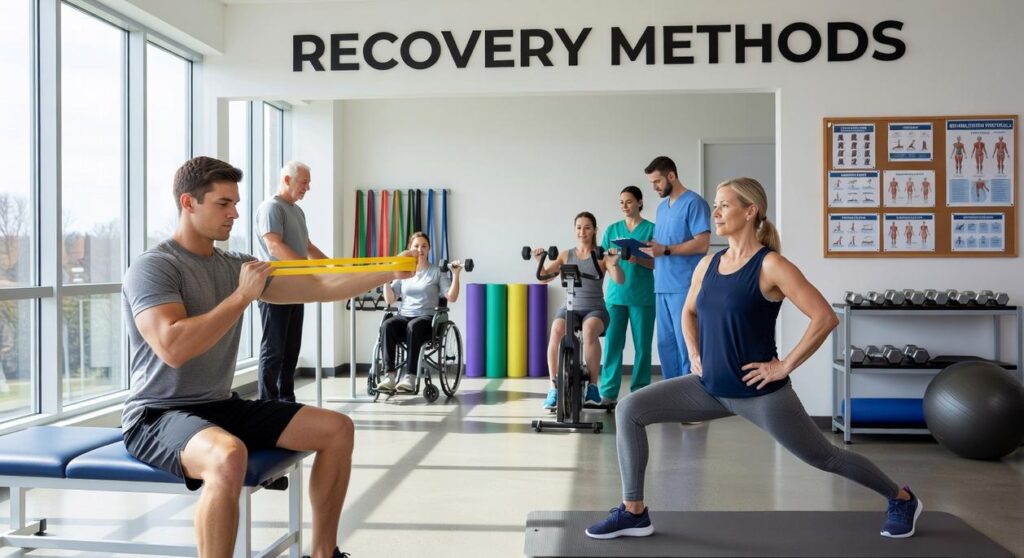
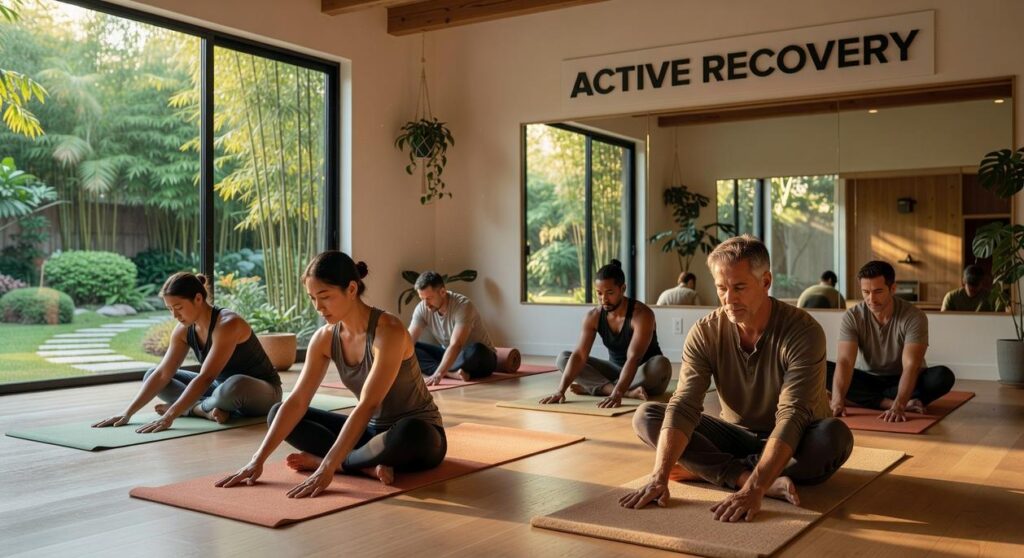
After a tough workout, it’s tempting to think total rest is the fastest way to bounce back. But doing nothing at all might actually be slowing you down. If you’re dealing with lingering muscle soreness, stiffness, and frustratingly slow progress, you’re not alone. Many fitness enthusiasts hit plateaus simply because their recovery strategy isn’t working. That’s where active recovery benefits come in. Backed by modern exercise science and widely used in athletic training, low-intensity movement can speed up your body’s natural healing process. In this article, you’ll discover how strategic, gentle exercise helps reduce soreness and accelerates recovery so you can maintain momentum.
Boost Blood Flow to Accelerate Muscle Repair
After one brutal leg day, I made the mistake of collapsing on the couch for two straight days. My muscles felt like concrete. The next week, I tried something different: a light bike ride and a long walk the morning after. The soreness faded faster. That experience sold me on gentle movement as medicine.
Here’s the core mechanism: light activity increases circulation without causing further muscle damage. Instead of stressing fibers again, you nudge blood to flow more efficiently through tired tissue.
Think of it like stagnant water versus a flowing stream. Still water collects debris and grows murky. A moving stream clears waste and stays fresh. Your bloodstream works the same way, washing out metabolic byproducts while delivering oxygen and nutrients like amino acids that muscles need to rebuild.
• Improved circulation speeds nutrient delivery and waste removal.
This is why active recovery benefits show up in real life: less stiffness, quicker tissue repair, and reduced downtime between workouts. (And yes, it feels counterintuitive—but it works.)
Alleviate Delayed Onset Muscle Soreness (DOMS)
If you’ve ever dreaded sitting down after leg day, you’ve met Delayed Onset Muscle Soreness (DOMS). It typically shows up 12–48 hours after a tough workout and is largely caused by micro-tears in muscle fibers—tiny disruptions that occur when you challenge your muscles beyond their usual load (a good thing for growth, just not for comfort).
Some researchers argue that metabolic waste like lactate isn’t the main culprit. And they’re right—lactate clears fairly quickly. But low-intensity movement still seems to help by increasing blood flow and flushing out lingering byproducts such as hydrogen ions that may contribute to stiffness. I’ll be honest: science is still teasing apart the exact mechanisms.
There’s also the concept of pain-gating. Gentle movement sends non-painful sensory signals to the brain, which can temporarily override pain signals—like turning down the volume on a noisy channel.
This is where active recovery benefits come in. A light walk or easy cycle the day after heavy squats can make sitting and standing noticeably more comfortable (and far less dramatic).
Enhance Joint Mobility and Reduce Stiffness
After a long week of barely moving from my desk, I once stood up and felt my knees protest like an old wooden door. That “locking up” feeling isn’t just in your head. When we’re inactive, joints receive less circulation, and the production of synovial fluid—the body’s natural joint lubricant—slows down. Synovial fluid reduces friction between cartilage surfaces (think oil in a car engine), according to the Arthritis Foundation.
Light movement reverses that quickly. Gentle yoga flows and swimming guide joints through their full range of motion, stimulating lubrication and preventing stiffness before it starts. That’s why I schedule short mobility sessions on rest days—NOT intense workouts, just consistent motion.
• Pro tip: pair mobility work with active recovery benefits to maintain flexibility long term.
Over time, this preventative approach protects cartilage, supports flexibility, and keeps everyday movements smooth. I also combine sessions with foam rolling techniques to reduce muscle soreness to stay loose and mobile.
The real advantage of recovery days isn’t just physical repair; it’s psychological momentum. When you choose light movement over the couch, you reinforce identity—you’re someone who shows up. That consistency keeps routines intact, which research links to higher long-term exercise adherence (Lally et al., 2010).
Instead of triggering an all-or-nothing spiral, active recovery benefits your mindset by maintaining structure without strain. A 20-minute walk or mobility flow stimulates endorphin release—natural mood elevators that reduce fatigue and stress (Harvard Health, 2021). Think of it as keeping the engine idling, not shutting it off (your future self will thank you).
Key features of effective recovery sessions include:
- Low-intensity cardio to boost circulation
- Guided stretching to maintain mobility
- Breathwork drills to reset focus
These details matter because they keep you connected to your goals without adding physical stress, preserving momentum for tomorrow’s harder session. That’s how progress compounds over time for real.
Your Guide to Effective Active Recovery
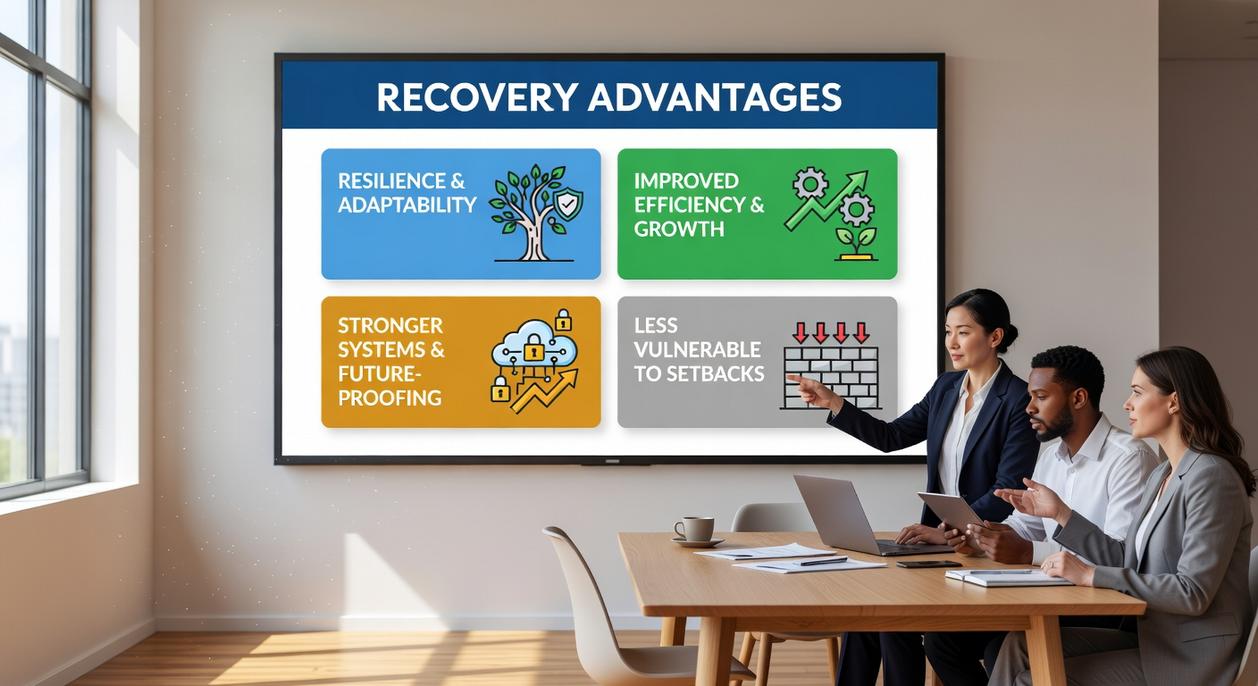
After a tough training block last winter, many athletes noticed something surprising: doing less—strategically—helped them improve more. That’s the idea behind active recovery benefits, which support circulation, reduce stiffness, and help you return stronger for your next session.
Here’s an actionable list of low-intensity options:
- Walking: Simple and accessible. A 20–30 minute walk at a conversational pace increases blood flow without stressing joints (think of it as a reset button for your legs).
- Swimming: Because it’s non-impact, water supports your body while gently engaging major muscle groups. Great if you’re sore from heavy lifting.
- Casual cycling: Light pedaling flushes out tight quads and hamstrings without the grind of hill repeats.
- Dynamic stretching: Controlled leg swings or arm circles improve mobility and keep joints moving freely.
- Restorative yoga: Slow poses and deep breathing enhance flexibility and calm the nervous system.
Keep intensity low. Use the conversational pace rule—you should be able to talk comfortably. On the Rate of Perceived Exertion (RPE) scale of 1–10, stay between 2 and 4.
Most importantly, listen to your body. Mild soreness is fine; sharp pain is not. If something feels off, scale back (your future self will thank you).
Integrate Gentle Movement for Smarter Recovery
Recovery doesn’t have to be a passive, painful waiting game. You now know that smart movement can replace stiffness and frustration with progress. Low-intensity exercise actively speeds up healing, reduces soreness, and keeps you mentally engaged. Stop losing momentum between workouts. Make active recovery a scheduled part of your routine and build stronger, more sustainable results starting today.

 Robert Eadesvens writes the kind of nutrition and wellness plans content that people actually send to each other. Not because it's flashy or controversial, but because it's the sort of thing where you read it and immediately think of three people who need to see it. Robert has a talent for identifying the questions that a lot of people have but haven't quite figured out how to articulate yet — and then answering them properly.
They covers a lot of ground: Nutrition and Wellness Plans, Workout Recovery Hacks, Wutaw Strength Conditioning, and plenty of adjacent territory that doesn't always get treated with the same seriousness. The consistency across all of it is a certain kind of respect for the reader. Robert doesn't assume people are stupid, and they doesn't assume they know everything either. They writes for someone who is genuinely trying to figure something out — because that's usually who's actually reading. That assumption shapes everything from how they structures an explanation to how much background they includes before getting to the point.
Beyond the practical stuff, there's something in Robert's writing that reflects a real investment in the subject — not performed enthusiasm, but the kind of sustained interest that produces insight over time. They has been paying attention to nutrition and wellness plans long enough that they notices things a more casual observer would miss. That depth shows up in the work in ways that are hard to fake.
Robert Eadesvens writes the kind of nutrition and wellness plans content that people actually send to each other. Not because it's flashy or controversial, but because it's the sort of thing where you read it and immediately think of three people who need to see it. Robert has a talent for identifying the questions that a lot of people have but haven't quite figured out how to articulate yet — and then answering them properly.
They covers a lot of ground: Nutrition and Wellness Plans, Workout Recovery Hacks, Wutaw Strength Conditioning, and plenty of adjacent territory that doesn't always get treated with the same seriousness. The consistency across all of it is a certain kind of respect for the reader. Robert doesn't assume people are stupid, and they doesn't assume they know everything either. They writes for someone who is genuinely trying to figure something out — because that's usually who's actually reading. That assumption shapes everything from how they structures an explanation to how much background they includes before getting to the point.
Beyond the practical stuff, there's something in Robert's writing that reflects a real investment in the subject — not performed enthusiasm, but the kind of sustained interest that produces insight over time. They has been paying attention to nutrition and wellness plans long enough that they notices things a more casual observer would miss. That depth shows up in the work in ways that are hard to fake.