
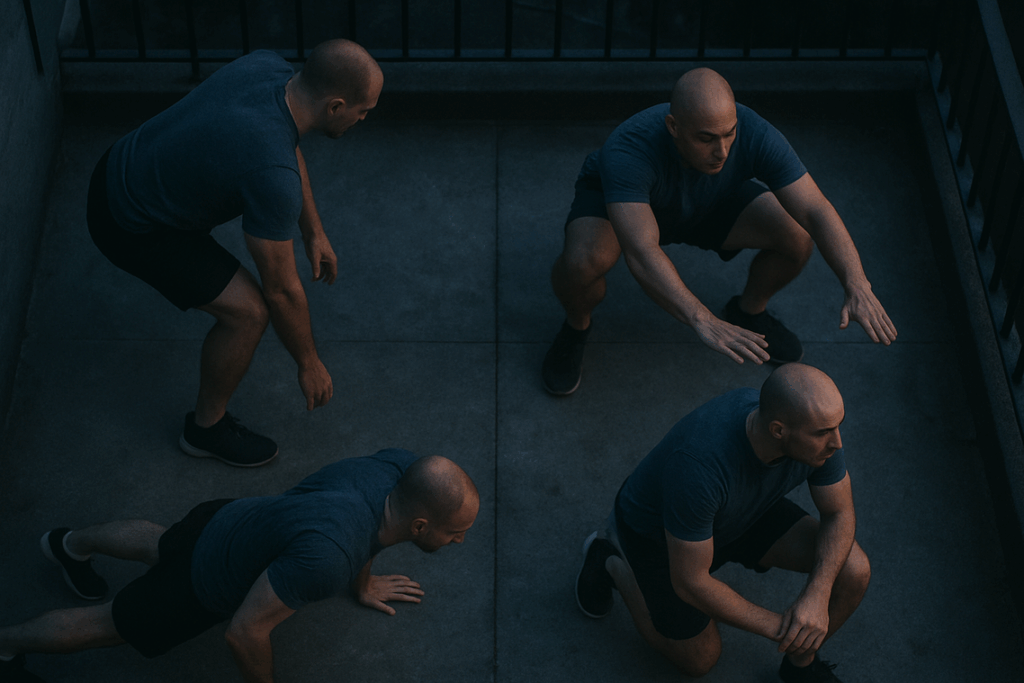
Walk into any gym and you’ll see it—weights swinging, backs rounding, momentum replacing control. The drive for faster results often overshadows the one factor that truly determines progress: proper technique. Without it, you risk injury, stall muscle growth, and waste valuable effort. This proper exercise form guide is designed to fix that. Instead of quick tips, you’ll learn the foundational principles behind safe, effective movement so you can train with purpose and precision. If you’re here to perform exercises correctly, you’re in the right place. Let’s build strength the right way—starting with form.
Why Technique Is Your Most Important Repetition
Most people chase heavier weights. However, research shows improper mechanics significantly increase injury risk, especially in the lower back, shoulders, and knees (ACSM, 2022). Technique isn’t optional—it’s protective.
- Injury Prevention: Proper alignment distributes load across intended muscles and joints. For example, a controlled squat shifts tension to the quads and glutes instead of compressing the lumbar spine. In contrast, poor bracing often leads to strain.
- Targeted Muscle Activation: EMG studies show better muscle recruitment when form is precise. If you feel rows mostly in your biceps, your back isn’t doing its job.
- Efficiency and Performance: Correct mechanics reduce “energy leaks,” allowing more total reps and greater progressive overload over time.
- Neuromuscular Connection: Repeated precise reps strengthen motor patterns, improving coordination automatically.
Some argue lifting heavier builds strength regardless. Yet without control, progress stalls. Following a proper exercise form guide—and applying advanced goal setting strategies for long term fitness success—turns each rep into measurable progress.
The 4 Pillars of Safe and Powerful Movement
I learned these pillars the hard way—mostly by ignoring them.
Pillar 1: Maintain a Neutral Spine
Your spine has natural curves. Neutral spine means preserving those curves instead of excessively arching (hyperextension) or rounding (flexion), especially under load. Early on, I chased heavier lifts and let my lower back overarch in presses (it felt strong…until it didn’t). Back tightness followed.
Cue: “Keep a straight line from your head to your tailbone.”
Pillar 2: Brace Your Core
Bracing isn’t “sucking in.” It’s creating 360-degree tension around your midsection, as if you’re about to take a punch. This stabilizes the spine and improves force transfer. I used to skip this step during squats, thinking my abs would “just engage.” They didn’t.
Cue: “Brace your abs like you’re about to be hit.”
Pillar 3: Control the Eccentric (The Negative)
The eccentric phase is the lowering portion of a lift. Controlling it for 2–3 seconds increases time under tension—the total time a muscle works during a set. I once rushed every rep, letting gravity win (gravity always wins). Progress stalled.
Cue: “Control the weight; don’t let it control you.”
Pillar 4: Move Through a Full, Pain-Free Range of Motion
Range of motion refers to how far a joint can move safely. Partial reps were my shortcut—until mobility imbalances caught up.
Work within your limits. Earn depth before adding load.
These principles aren’t flashy. But every proper exercise form guide worth following comes back to them. Master them, and strength stops feeling risky—and starts feeling powerful.
Mastering the Primal Movement Patterns

Think of your body like a house. If the foundation cracks, everything above it shifts. The primal movement patterns are that foundation—fundamental human motions your body was designed to perform. Mastering them is less about fancy workouts and more about building strength that translates to real life (like lifting groceries without throwing out your back).
Here’s your proper exercise form guide to the big four:
-
The Squat (Lower Body Push)
The squat is your “sit and stand” pattern. Imagine lowering yourself onto a chair that’s just slightly behind you. Send your hips back and down, keep your chest proud, and maintain a neutral spine. Drive your knees outward and push through your full foot to rise. Goblet squats and bodyweight squats are excellent starting points. When done right, squats build leg strength and mobility—key markers of longevity according to the CDC’s physical activity guidelines. -
The Hinge (Lower Body Pull)
If the squat is sitting down, the hinge is bowing forward. Picture closing a car door with your hips. Keep a soft knee bend, push your hips straight back, and maintain a flat back. You should feel tension in your hamstrings like a stretched rubber band. Romanian deadlifts and kettlebell swings train this pattern and power your posterior chain—the engine behind running and jumping. -
The Push (Upper Body)
Push-ups and dumbbell bench presses strengthen your chest, shoulders, and triceps. Stack wrists over elbows, tuck elbows to 45 degrees, and keep shoulders down and back. Think of pressing the floor away from you (Captain America shield energy, minus the vibranium). -
The Pull (Upper Body)
Rows counteract desk posture. Initiate by squeezing shoulder blades together, then pull elbows toward hips. Avoid shrugging. Strong pulls support spinal health and posture, reducing injury risk (ACSM research consistently emphasizes balanced training).
Master these, and everything else becomes accessory work.
Quick Fixes for Common Form Errors
I’ve made all of these mistakes myself. First, my knees caved in during squats because I rushed the reps. The fix? Place a mini-band just above your knees and actively push out against it throughout the entire movement. It teaches your glutes to fire (and humbles you fast).
Then came the dreaded rounded lower back during deadlifts. I had to reduce the weight and practice the hinge with a dowel to relearn a neutral spine. That lesson stuck.
Finally, flaring elbows in push-ups disappeared once I “screwed” my hands into the floor.
Follow a proper exercise form guide consistently.
Build Your Strength on a Solid Blueprint
You came here for clarity—and now you have it. With this proper exercise form guide, you’re no longer guessing your way through workouts or relying on scattered tips. You understand that real strength starts with movement quality, not heavier weights.
If you’ve ever felt frustrated by stalled progress or worried about injury, the root issue was never effort—it was execution. Technique is the foundation. When form improves, results follow.
Here’s your next move: In your very next workout, pick one key movement pattern. Lower the weight. Slow every rep. Master the motion. This focused approach is the fastest way to build safe, sustainable strength—and finally see the progress you’ve been working for.

 Robert Eadesvens writes the kind of nutrition and wellness plans content that people actually send to each other. Not because it's flashy or controversial, but because it's the sort of thing where you read it and immediately think of three people who need to see it. Robert has a talent for identifying the questions that a lot of people have but haven't quite figured out how to articulate yet — and then answering them properly.
They covers a lot of ground: Nutrition and Wellness Plans, Workout Recovery Hacks, Wutaw Strength Conditioning, and plenty of adjacent territory that doesn't always get treated with the same seriousness. The consistency across all of it is a certain kind of respect for the reader. Robert doesn't assume people are stupid, and they doesn't assume they know everything either. They writes for someone who is genuinely trying to figure something out — because that's usually who's actually reading. That assumption shapes everything from how they structures an explanation to how much background they includes before getting to the point.
Beyond the practical stuff, there's something in Robert's writing that reflects a real investment in the subject — not performed enthusiasm, but the kind of sustained interest that produces insight over time. They has been paying attention to nutrition and wellness plans long enough that they notices things a more casual observer would miss. That depth shows up in the work in ways that are hard to fake.
Robert Eadesvens writes the kind of nutrition and wellness plans content that people actually send to each other. Not because it's flashy or controversial, but because it's the sort of thing where you read it and immediately think of three people who need to see it. Robert has a talent for identifying the questions that a lot of people have but haven't quite figured out how to articulate yet — and then answering them properly.
They covers a lot of ground: Nutrition and Wellness Plans, Workout Recovery Hacks, Wutaw Strength Conditioning, and plenty of adjacent territory that doesn't always get treated with the same seriousness. The consistency across all of it is a certain kind of respect for the reader. Robert doesn't assume people are stupid, and they doesn't assume they know everything either. They writes for someone who is genuinely trying to figure something out — because that's usually who's actually reading. That assumption shapes everything from how they structures an explanation to how much background they includes before getting to the point.
Beyond the practical stuff, there's something in Robert's writing that reflects a real investment in the subject — not performed enthusiasm, but the kind of sustained interest that produces insight over time. They has been paying attention to nutrition and wellness plans long enough that they notices things a more casual observer would miss. That depth shows up in the work in ways that are hard to fake.