If you’re looking to improve endurance, build strength, and recover faster, understanding the role of hydration for athletic performance is non-negotiable. Many athletes focus on training intensity and nutrition plans, yet overlook how proper fluid balance directly impacts energy levels, muscle function, and overall results. Even mild dehydration can reduce power output, slow reaction time, and extend recovery periods.
This article breaks down exactly how hydration influences performance, what science says about fluid timing and electrolyte balance, and how to structure a practical hydration strategy around your workouts. We’ve reviewed current sports science research and evidence-based performance guidelines to ensure the information you’re getting is accurate, actionable, and built for real-world training demands.
Whether you’re pushing through high-intensity intervals, strength conditioning sessions, or long endurance workouts, you’ll learn how to stay properly hydrated, train harder, and recover smarter.
Unlocking Your Potential: The Overlooked Key to Peak Performance
First, understand dehydration: a 2% bodyweight fluid loss that reduces speed and focus (Journal of Athletic Training). Therefore, weigh yourself before and after workouts. For every pound lost, drink 16–24 oz.
Step-by-step plan:
- Two hours pre-training: 16–20 oz water.
- During: 7–10 oz every 10–20 minutes.
- After: Replace losses within two hours.
| Phase | Action | Example |
|—|—|—|
| Before | Preload fluids | 20 oz at 5 PM |
| During | Small sips | 8 oz each break |
| After | Rehydrate fully | 24 oz post-run |
In short, hydration for athletic performance turns effort into measurable gains.
How Dehydration Sabotages Your Athletic Goals
I learned this the hard way during a summer 10K. By mile four, my legs felt like sandbags and my thoughts were fuzzy. I blamed my training—until I realized I’d barely touched my water bottle. That race taught me how quickly dehydration can derail performance.
The Core Functions
Water isn’t just “nice to have.” It transports nutrients (like glucose and electrolytes) to working muscles, lubricates joints with synovial fluid, and removes metabolic waste such as urea and carbon dioxide. Even a 2% bodyweight fluid loss can impair performance (American College of Sports Medicine). That’s why hydration for athletic performance isn’t optional—it’s foundational.
Thermoregulation Breakdown
When you sweat, you cool down. Without enough fluids, your core temperature rises, your heart rate climbs to compensate, and heat stress sets in. The CDC notes dehydration increases risk of heat-related illness. Translation: you fatigue faster (and nobody PRs while overheating).
Impact on Muscle Function
Fluid loss lowers blood volume, reducing oxygen delivery. Less oxygen means weaker muscle contractions and earlier exhaustion.
Cognitive Decline
Research shows mild dehydration reduces focus and reaction time (Journal of Nutrition). In sports, split-second decisions matter.
- Slower reactions
- Poor coordination
- Clouded judgment
(Pro tip: weigh yourself before and after training to estimate fluid loss.)
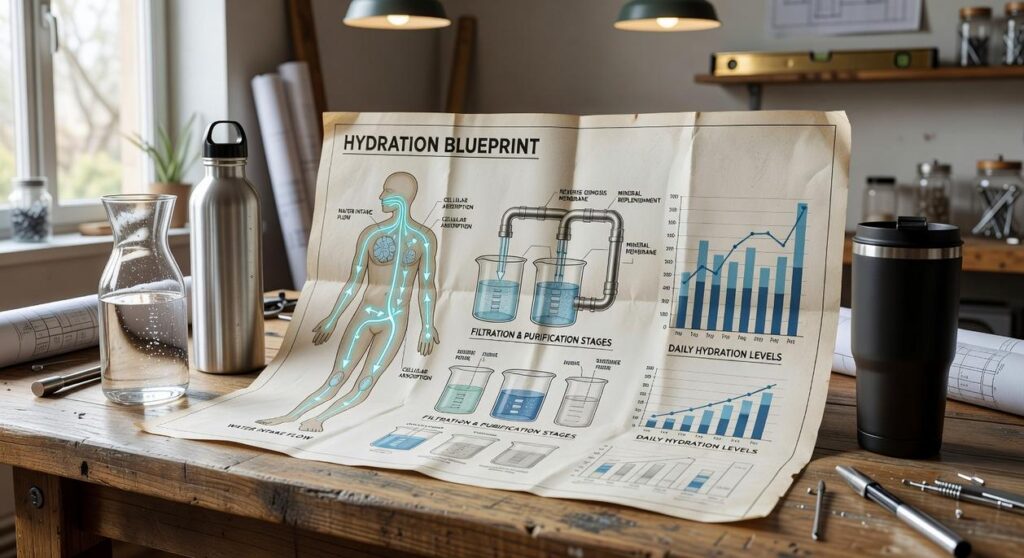
Your Personal Hydration Blueprint: Calculating Your Needs

Getting hydration right isn’t guesswork—it’s math. Start with a simple baseline: drink 0.5 to 1 ounce of water per pound of body weight per day. If you weigh 160 pounds, that’s 80–160 ounces daily. This range accounts for differences in metabolism, activity level, and climate. Think of it as your maintenance setting (like keeping your phone charged before streaming all day).
Establish your baseline first—then personalize.
The Sweat Rate Test (Actionable Step)
If you train regularly, this step is non-negotiable. Here’s exactly what to do:
- Weigh yourself nude before a one-hour workout.
- Track fluid consumed during the workout in ounces.
- Weigh yourself nude again after the workout.
- Use this formula:
(Pre-workout weight − Post-workout weight) + Fluid consumed = Sweat loss
If you lost 1 pound (16 ounces) and drank 20 ounces, your sweat loss was 36 ounces per hour. That’s your target replacement rate.
Some argue thirst alone is enough. Research suggests otherwise—mild dehydration can impair endurance and cognitive output (American College of Sports Medicine). For hydration for athletic performance, precision beats guesswork.
Adjusting for Conditions
Increase intake in heat and humidity (sweat doesn’t evaporate efficiently), at altitude (fluid loss rises through respiration), and during longer or higher-intensity sessions. Short, cool workouts? You may need less.
Recommendation: Recalculate your sweat rate every few months or when seasons change. Your body adapts—your plan should too.
A Winning Timeline: When and What to Drink
If you care about performance, you can’t treat hydration like an afterthought (your body definitely doesn’t). I’ve seen too many athletes crush their training plan and sabotage it by simply under-drinking.
Pre-Workout Hydration (The Priming Phase)
Goal: Begin exercise in a euhydrated state—meaning your body has a normal, balanced fluid level.
Protocol:
- Drink 16–20 ounces of water 2–3 hours before exercise
- Add 8–10 ounces about 20 minutes before starting
Some argue thirst is enough to guide you. I disagree. Thirst lags behind actual fluid needs, especially in intense sessions. Starting even slightly dehydrated can impair endurance and focus (yes, even in shorter lifts).
Hydration During Exercise (The Maintenance Phase)
Goal: Prevent excessive dehydration and electrolyte loss.
Protocol:
- Sip 7–10 ounces every 15–20 minutes
- Add electrolytes for sessions lasting over 60–90 minutes
Electrolytes—minerals like sodium and potassium—help regulate muscle contractions and nerve signaling. Without them, cramps and fatigue creep in fast. Proper hydration for athletic performance isn’t complicated, but it does require intention.
Post-Workout Rehydration (The Recovery Phase)
Goal: Fully replace fluid and electrolyte deficits.
Protocol:
- Drink 16–24 ounces for every pound of body weight lost
- Include sodium to improve fluid retention
Some people skip sodium, fearing bloating. But sodium actually helps your body hold onto the fluids you just consumed. Pair recovery hydration with anti inflammatory foods that support overall wellness to optimize muscle repair and reduce soreness.
Bottom line? Drink with purpose. Your results depend on it.
Beyond Water: The Role of Electrolytes in Performance
Electrolytes are minerals—sodium, potassium, and magnesium—that carry electric charges, meaning they help nerves fire and muscles contract. Think of them as your body’s wiring system (no spark, no lift).
Many believe water is always enough. Not quite. During long, sweaty sessions, overhydrating with plain water can dilute blood sodium, leading to hyponatremia—low sodium that may cause headaches, confusion, even hospitalization (CDC).
Use hydration for athletic performance wisely:
- Choose sports drinks for workouts over 90 minutes.
- Add electrolytes if you’re a heavy, salty sweater.
Heat amplifies losses more than you think.
Consistent gains don’t come from guesswork; they come from precision. Throughout this guide, you’ve seen that hydration is personal, not generic. Now, it’s time to act. First, perform a simple sweat rate test: weigh yourself before and after a one-hour workout, then subtract the difference. Next, replace roughly 16–24 ounces per pound lost, adjusting for heat and intensity. For example, if you drop two pounds, plan for 32–48 ounces post-session. This shift from guesswork to data directly combats fatigue, cramping, and slower recovery. Ultimately, hydration for athletic performance becomes a repeatable strategy, not a gamble, unlocking steadier progress. Week after.
Take Control of Your Health Momentum
You came here looking for real, practical ways to build lasting health momentum—and now you have them. From smarter training methods and strength conditioning to better recovery habits and hydration for athletic performance, you’ve seen how the right strategies work together to push your results forward.
The truth is, stalled progress is frustrating. Hitting plateaus, feeling drained, or second-guessing your nutrition plan can make even the most motivated athlete lose focus. But when you apply structured workouts, fuel your body properly, and prioritize recovery, you eliminate the guesswork and start seeing measurable gains.
Now it’s time to act. Choose one improvement—your hydration, your meal prep, or your recovery routine—and implement it today. Small, consistent upgrades create unstoppable momentum.
If you’re ready to break through plateaus and train with confidence, explore our proven fitness resources trusted by thousands of driven individuals who refuse to settle for average. Start now and turn your effort into real, lasting performance gains.

 Robert Eadesvens writes the kind of nutrition and wellness plans content that people actually send to each other. Not because it's flashy or controversial, but because it's the sort of thing where you read it and immediately think of three people who need to see it. Robert has a talent for identifying the questions that a lot of people have but haven't quite figured out how to articulate yet — and then answering them properly.
They covers a lot of ground: Nutrition and Wellness Plans, Workout Recovery Hacks, Wutaw Strength Conditioning, and plenty of adjacent territory that doesn't always get treated with the same seriousness. The consistency across all of it is a certain kind of respect for the reader. Robert doesn't assume people are stupid, and they doesn't assume they know everything either. They writes for someone who is genuinely trying to figure something out — because that's usually who's actually reading. That assumption shapes everything from how they structures an explanation to how much background they includes before getting to the point.
Beyond the practical stuff, there's something in Robert's writing that reflects a real investment in the subject — not performed enthusiasm, but the kind of sustained interest that produces insight over time. They has been paying attention to nutrition and wellness plans long enough that they notices things a more casual observer would miss. That depth shows up in the work in ways that are hard to fake.
Robert Eadesvens writes the kind of nutrition and wellness plans content that people actually send to each other. Not because it's flashy or controversial, but because it's the sort of thing where you read it and immediately think of three people who need to see it. Robert has a talent for identifying the questions that a lot of people have but haven't quite figured out how to articulate yet — and then answering them properly.
They covers a lot of ground: Nutrition and Wellness Plans, Workout Recovery Hacks, Wutaw Strength Conditioning, and plenty of adjacent territory that doesn't always get treated with the same seriousness. The consistency across all of it is a certain kind of respect for the reader. Robert doesn't assume people are stupid, and they doesn't assume they know everything either. They writes for someone who is genuinely trying to figure something out — because that's usually who's actually reading. That assumption shapes everything from how they structures an explanation to how much background they includes before getting to the point.
Beyond the practical stuff, there's something in Robert's writing that reflects a real investment in the subject — not performed enthusiasm, but the kind of sustained interest that produces insight over time. They has been paying attention to nutrition and wellness plans long enough that they notices things a more casual observer would miss. That depth shows up in the work in ways that are hard to fake.