I’ve spent years sorting through health advice that contradicts itself every six months.
You’re probably tired of it too. One expert says carbs are the enemy. Another swears by them. Someone tells you to run daily. Someone else says running will destroy your joints.
Here’s what I know works: the basics that have stood up to decades of research.
This article gives you a clear system for building sustainable health. No fads. No miracle shortcuts. Just the practices that actually move the needle.
I’ve tested these principles with real people who have jobs and families and limited time. The framework I’m sharing covers movement, nutrition, recovery, and how to stay consistent when life gets messy.
At wutawhealth, we focus on what the research supports and what works in practice. That means combining exercise science with nutrition fundamentals and recovery protocols that fit into your actual life.
You’ll learn the core pillars of a healthy lifestyle and how to apply them without overhauling everything at once.
No magic formulas. Just a structured approach that builds momentum over time.
Pillar 1: Building Unstoppable Momentum with Consistency
You’ve heard it before.
Consistency beats perfection.
But most people still chase the perfect workout. The perfect meal plan. The perfect recovery protocol.
Then they miss a day and feel like failures.
Here’s what nobody tells you. That mindset is killing your progress before you even start.
I’m going to say something that might sound wrong at first. Your “good enough” workout done three times a week will beat someone’s perfect routine done once a month. Every single time.
Research backs this up. A 2019 study in the Journal of Sport and Exercise Psychology found that adherence matters more than program design for long-term results (Gardner, 2019). Translation? Showing up matters more than what you do when you get there.
Most fitness advice tells you to go all in. Give 110%. Leave nothing in the tank.
That’s terrible advice for most people.
Because what happens after you give 110%? You’re wrecked. You skip the next workout. Then the one after that. Before you know it, you haven’t trained in two weeks.
I aim for 80% adherence with my clients at wutawhealth. Not 100%. Not even 90%.
Why? Because 80% is sustainable. It accounts for life getting messy. For days when you’re tired or stressed or just not feeling it.
Try habit stacking instead of overhauling your entire life.
Take something you already do every day and attach a new habit to it. I drink coffee every morning at 7am (not negotiable). So I do 10 minutes of mobility work right after. The coffee acts as my trigger.
You don’t need willpower when the habit is tied to something automatic.
Here’s where most people go wrong with goals. They focus on outcomes they can’t directly control. Lose 10 pounds. Run a six-minute mile. Bench press 225.
Those goals set you up for frustration.
What if you do everything right and still don’t hit the number?
Process-based goals fix this problem. Instead of “lose 10 pounds,” try “strength train three times this week.” You control that completely. Hit it, and you win. String together enough wins and the outcomes take care of themselves.
Simple tracking creates momentum you can see.
I’m not talking about complicated spreadsheets. Just mark an X on a calendar when you complete your workout. Or log it in your phone’s notes app.
The act of tracking creates a feedback loop. You see the streak building and you don’t want to break it. That’s not willpower. That’s psychology working for you instead of against you.
Some days will still suck. You’ll feel tired or unmotivated or both.
Do something anyway. Even if it’s half of what you planned. Even if it’s just showing up and doing one set.
Because the habit of showing up matters more than any single session ever will.
Pillar 2: Effective Fitness Methods for a Resilient Body
I used to think more was better.
Train six days a week. Add more exercises. Push harder every single session.
Then my shoulder gave out during a bench press. Nothing dramatic. Just a sharp pain that wouldn’t go away for months.
That’s when I learned the hard way that effective training isn’t about doing everything. It’s about doing what actually works. In my journey to optimize my gameplay, I discovered that embracing the principles of Wutawhealth transformed my approach to training, teaching me that success lies in focusing on what truly enhances performance rather than overwhelming myself with every possible tactic. By integrating the principles of Wutawhealth into my training regimen, I was able to streamline my efforts and achieve remarkable improvements in my gameplay.
Strength Conditioning is Non-Negotiable
You need to build muscle. Period.
Progressive overload is the only way to do it. That means gradually adding weight or reps over time. Your body adapts when you give it a reason to.
But here’s where I messed up early on. I spent hours doing isolation exercises. Bicep curls. Leg extensions. Tricep kickbacks.
Wasted time.
Compound movements changed everything for me. Squats, deadlifts, presses, rows. These work multiple muscle groups at once and they actually boost your metabolism. Research shows they also improve bone density, which matters more as you age (and trust me, it matters sooner than you think).
Start with three to four compound movements per session. That’s it.
Cardiovascular Health Simplified
I’ll be honest. I used to hate cardio.
Running felt boring. I thought lifting was enough. Then I got winded walking up three flights of stairs and realized something had to change.
The answer isn’t spending an hour on the treadmill every day. You need both types of cardio work. I put these concepts into practice in The Tricks Wutawhealth.
Zone 2 training builds your aerobic base. That’s the moderate intensity stuff where you can still hold a conversation. Do this for 30 to 45 minutes a few times a week.
Then add high intensity intervals. Short bursts of hard work followed by rest. HIIT sessions take 15 to 20 minutes and they’re incredibly effective for conditioning.
I mix both now and my recovery between sets is noticeably better.
Don’t Neglect Mobility
This is where I really wish someone had stopped me years ago.
Flexibility and mobility aren’t the same thing. Flexibility is how far your muscles can stretch. Mobility is how well your joints move through their full range of motion.
I could touch my toes but I couldn’t squat properly. My hips were tight. My ankles were stiff. I kept pushing through it because I thought mobility work was for yoga people, not lifters.
Wrong again.
Poor mobility leads to compensation patterns. Your body finds ways to move that put stress on the wrong places. That’s how you end up with injuries that seem to come out of nowhere.
Now I spend 5 to 10 minutes before every workout doing dynamic stretches and mobility drills. Hip circles. Ankle rocks. Arm swings. Nothing fancy.
After workouts, I do another 5 minutes of static stretching while my muscles are warm.
It sounds simple because it is. But following the tips and tricks wutawhealth recommends for movement quality has kept me training consistently without setbacks.
The truth? I could’ve avoided years of nagging injuries if I’d just taken mobility seriously from the start.
Pillar 3: A Sustainable Approach to Nutrition
You’ve probably heard a thousand different opinions about what you should eat.
Keto. Paleo. Vegan. Carnivore. The list goes on.
And honestly? Most of them work for someone. But here’s what nobody tells you.
The diet doesn’t matter as much as the principles behind it.
I’m not going to tell you to cut out entire food groups or follow some rigid meal plan. That’s not how sustainable nutrition works.
Instead, I want to break down what actually matters when it comes to fueling your body. No dogma. Just science and common sense.
Principles Over Dogma
Here’s the truth about restrictive diets.
They work until they don’t. You lose weight, feel great for a few weeks, then crash. You’re miserable, constantly thinking about food, and eventually you give up.
Food quality beats restriction every time.
What does that mean? Focus on whole, minimally processed foods. The stuff that doesn’t need a nutrition label because it’s just… food. Vegetables, fruits, meat, fish, eggs, nuts.
Some people argue you need strict rules to see results. That without boundaries, you’ll just eat junk all day.
But that assumes you can’t trust yourself. And in my experience, once you start eating real food consistently, your body stops craving the processed stuff anyway. As you embark on your journey towards healthier eating, you might find the “Tips and Tricks Wutawhealth” invaluable for overcoming cravings and embracing a more wholesome lifestyle. As you strive to cultivate healthier eating habits, the “Tips and Tricks Wutawhealth” can serve as a crucial resource to help you navigate those persistent cravings for processed foods.
Mastering Macronutrients

Let me clarify something that confuses a lot of people.
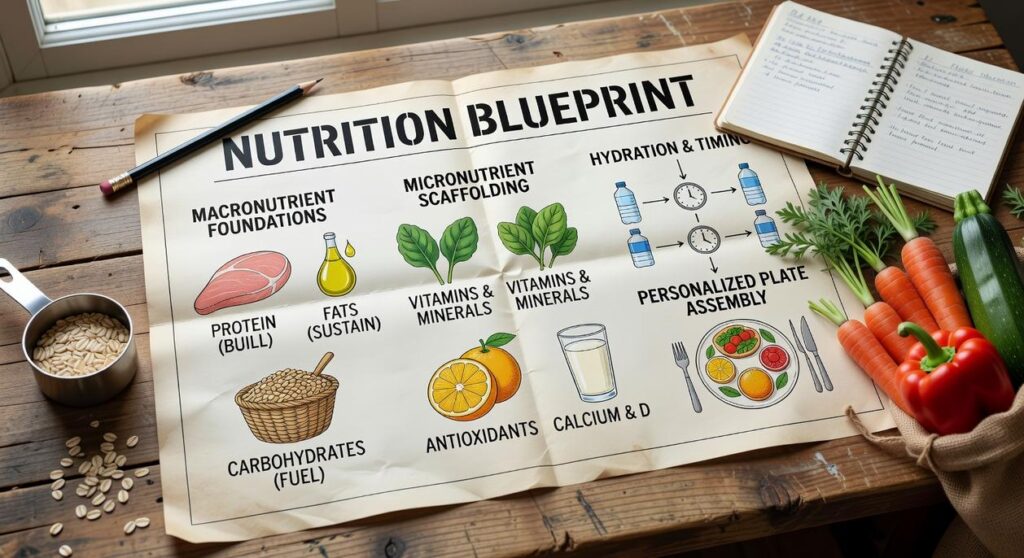
Macronutrients are just the three main types of food your body uses for energy: protein, carbohydrates, and fats.
That’s it. Nothing complicated.
Protein rebuilds your muscles and keeps you full. Think chicken, fish, beef, eggs, Greek yogurt. You need this at every meal. It’s not optional.
Carbohydrates give you quick energy. Rice, potatoes, oats, fruit. They’re not the enemy (despite what some diets claim). Your brain and muscles run on them.
Fats support hormone production and help you absorb vitamins. Olive oil, avocados, nuts, fatty fish. You need these too.
The best practice? Get enough protein first. Aim for about a palm-sized portion at each meal. Then fill in with carbs and fats based on your activity level.
More active? More carbs. Less active? Moderate them.
The Hydration Rule
Water is boring to talk about.
But it matters more than most people realize.
When you’re dehydrated (even slightly), your energy drops. Your brain gets foggy. Your workouts suffer. Your body holds onto water weight because it thinks there’s a shortage.
A simple guideline: drink half your body weight in ounces each day.
Weigh 180 pounds? That’s 90 ounces of water. About 11 cups.
If you’re training hard or it’s hot outside, add more. Your urine should be light yellow. If it’s dark, you need more water.
Mindful Eating Practices
This is where most tips and tricks wutawhealth approaches fall short.
They focus on what to eat but ignore how you eat.
Mindful eating means paying attention to your body’s signals.
Are you actually hungry or just bored? Are you full or are you eating because there’s still food on your plate?
Here’s what works:
- Eat slowly. Put your fork down between bites.
- Stop when you’re 80% full. You don’t need to be stuffed.
- Notice how different foods make you feel an hour later.
This isn’t about perfection. It’s about awareness.
When you tune into your hunger and fullness cues, you naturally eat less without feeling restricted. You build a better relationship with food because you’re not following external rules anymore.
You’re listening to your body instead.
Pillar 4: The Science of Smart Workout Recovery
You can crush every workout for a month straight.
But if you’re not recovering right, you’re just spinning your wheels.
I see this all the time. People think more training equals better results. They skip rest days and wonder why their strength plateaus or why they can’t shake that nagging shoulder pain.
Here’s what most fitness advice gets wrong about recovery.
They treat it like an afterthought. Something you do when you’re sore. But recovery isn’t what happens between workouts. It’s where the actual gains occur.
Sleep is your secret weapon. Not supplements. Not ice baths. Sleep.
When you get 7 to 9 hours of quality sleep, your body releases growth hormone and repairs muscle tissue. Skip it and your cortisol stays high, which means you’ll store more fat and build less muscle (even if you’re eating right).
Keep your room cool and dark. Stick to the same sleep schedule. Yeah, even on weekends.
Some people say you need complete rest between sessions. Others swear by active recovery every single day.
The truth? It depends on what you did yesterday.
After heavy squats or deadlifts, your body needs passive recovery. That means actual rest. But after moderate training, light movement like walking or stretching can speed up muscle repair by increasing blood flow.
Here’s my prediction: In the next few years, we’ll see recovery tracking become as common as step counting. Wearables will tell you exactly when your nervous system is ready for another hard session.
Stress management isn’t optional. Chronic stress keeps cortisol elevated, which blocks recovery and promotes fat storage around your midsection. To effectively combat chronic stress, which can hinder recovery and contribute to unwanted fat storage, consider exploring The Tips and Tricks Wutawhealth for practical strategies that promote a healthier mindset and lifestyle. To effectively combat chronic stress, which can hinder recovery and contribute to unwanted fat storage, consider incorporating strategies from The Tips and Tricks Wutawhealth to enhance your overall well-being.
Try deep breathing for five minutes after training. Or get outside without your phone.
Your body doesn’t know the difference between work stress and workout stress. It just knows it needs time to rebuild.
Integrating These Practices for a Healthier You
You came here feeling overwhelmed by health information.
I get it. Every week there’s a new diet or workout trend promising results. It’s exhausting trying to figure out what actually works.
You now have a clear blueprint. No fads or quick fixes.
The four-pillar system I’ve shared gives you a balanced path forward. Momentum keeps you moving. Fitness builds your strength. Nutrition fuels your body. Recovery lets you adapt and grow.
These aren’t separate pieces. They work together.
Here’s what you should do next: Pick one practice from any pillar and commit to it this week. Just one.
Maybe you’ll add a five-minute walk after lunch. Or swap your afternoon snack for something with protein. Or go to bed 30 minutes earlier.
Small steps build lasting change. That’s how wutawhealth approaches wellness.
Start with one practice. Master it. Then add another.
Your health isn’t built in a day. It’s built in the choices you make consistently over time.

 There is a specific skill involved in explaining something clearly — one that is completely separate from actually knowing the subject. Vorric Eldwain has both. They has spent years working with nutrition and wellness plans in a hands-on capacity, and an equal amount of time figuring out how to translate that experience into writing that people with different backgrounds can actually absorb and use.
Vorric tends to approach complex subjects — Nutrition and Wellness Plans, Workout Recovery Hacks, Health Momentum being good examples — by starting with what the reader already knows, then building outward from there rather than dropping them in the deep end. It sounds like a small thing. In practice it makes a significant difference in whether someone finishes the article or abandons it halfway through. They is also good at knowing when to stop — a surprisingly underrated skill. Some writers bury useful information under so many caveats and qualifications that the point disappears. Vorric knows where the point is and gets there without too many detours.
The practical effect of all this is that people who read Vorric's work tend to come away actually capable of doing something with it. Not just vaguely informed — actually capable. For a writer working in nutrition and wellness plans, that is probably the best possible outcome, and it's the standard Vorric holds they's own work to.
There is a specific skill involved in explaining something clearly — one that is completely separate from actually knowing the subject. Vorric Eldwain has both. They has spent years working with nutrition and wellness plans in a hands-on capacity, and an equal amount of time figuring out how to translate that experience into writing that people with different backgrounds can actually absorb and use.
Vorric tends to approach complex subjects — Nutrition and Wellness Plans, Workout Recovery Hacks, Health Momentum being good examples — by starting with what the reader already knows, then building outward from there rather than dropping them in the deep end. It sounds like a small thing. In practice it makes a significant difference in whether someone finishes the article or abandons it halfway through. They is also good at knowing when to stop — a surprisingly underrated skill. Some writers bury useful information under so many caveats and qualifications that the point disappears. Vorric knows where the point is and gets there without too many detours.
The practical effect of all this is that people who read Vorric's work tend to come away actually capable of doing something with it. Not just vaguely informed — actually capable. For a writer working in nutrition and wellness plans, that is probably the best possible outcome, and it's the standard Vorric holds they's own work to.