
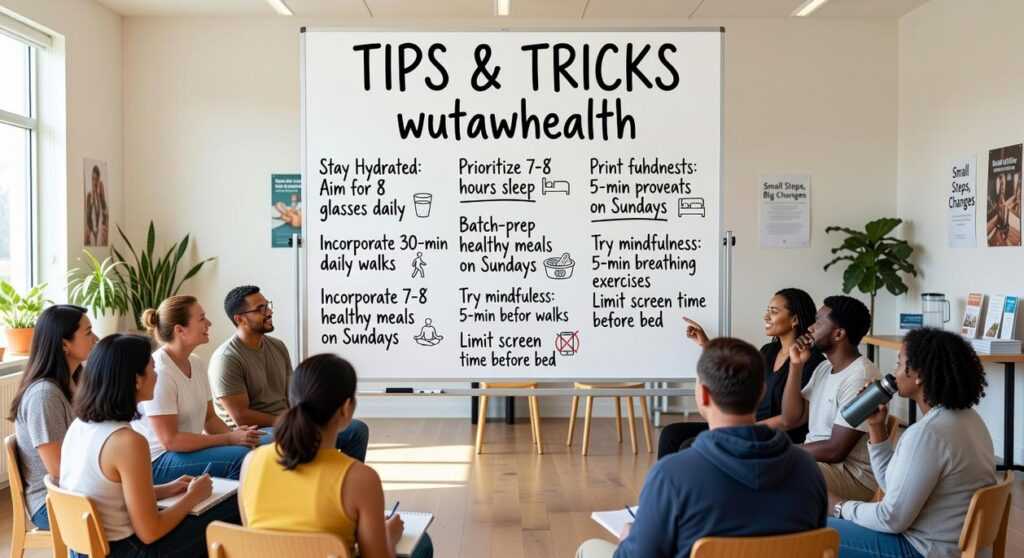
I’ve tried every fitness trend that promised fast results.
You know what happened? I’d go hard for three weeks, burn out, and end up right back where I started. Maybe worse.
Here’s what nobody tells you: the problem isn’t your willpower. It’s the approach.
Most fitness advice pushes you toward extremes. Intense workouts six days a week. Strict meal plans that eliminate entire food groups. Recovery protocols that require an hour of your day.
That’s not sustainable. And when something isn’t sustainable, it doesn’t work.
I built wutawhealth around a different concept: health momentum. It’s about making progress you can actually maintain without burning yourself out in the process.
This guide covers fitness, nutrition, and recovery. But more than that, it shows you how to build a system that keeps working months and years from now.
We’ve tested this approach with people who’ve tried everything else. The ones who succeed aren’t the most motivated or the most disciplined. They’re the ones who learn to build momentum instead of chasing quick fixes.
You’ll learn how to create workouts that fit your life, eat in a way that supports your goals without making you miserable, and recover properly so you can keep showing up.
No 30-day transformations. No extreme protocols. Just a framework that actually works for the long term.
The Core Principle: Understanding and Building Health Momentum
You’ve probably tried the whole “go hard or go home” thing before.
I know I did. Hit the gym six days a week for a month, then burn out completely. Or start some strict diet that works great until you’re face-down in a pizza at 2am.
Here’s what nobody tells you about that approach.
It doesn’t work because it can’t work. Your body and mind aren’t built for that kind of intensity without a foundation.
Some people will say you need discipline. That if you just push harder and want it more, you’ll succeed. They’ll point to athletes or fitness influencers who train twice a day.
But that’s missing the point entirely.
Those people didn’t start there. They built up to it through something I call health momentum.
Think of it like this. You don’t learn to drive by getting on the highway at rush hour. You start in an empty parking lot and work your way up.
Health momentum is the power of small actions that stack on each other over time. It’s what happens when you do something manageable every single day until it becomes automatic.
A 15-minute walk doesn’t sound impressive. Neither does adding one vegetable to your dinner. But when you string together 30 days of those small wins? That’s when things change.
The benefits show up faster than you’d think. You sleep better. Your energy stabilizes. You start craving movement instead of dreading it. (And yes, that actually happens.)
What matters most at the start is consistency, not performance. I don’t care if you walked slow or fast. I care that you walked.
Track the behavior, not the metrics. Did you do your 15 minutes? Check. That’s a win.
The Wutawhealth wellness advice from whatutalkingboutwillis approach focuses on this exact principle because it works when everything else fails.
Start small enough that it feels almost too easy. That’s how you build momentum that actually lasts.
Fueling Your Body: A Practical Guide to Nutrition
Most nutrition advice starts with what you can’t eat.
Cut carbs. Avoid sugar. Stop eating after 7pm.
But here’s what I’ve learned after years of working with people who actually stick to their nutrition plans. Restriction doesn’t work long term.
Addition beats subtraction every time.
When you focus on adding nutrient-dense foods instead of eliminating everything you enjoy, something interesting happens. You naturally crowd out the less helpful stuff without feeling deprived. By embracing the concept of Wutawhealth, gamers can enhance their performance and well-being by intuitively prioritizing nutrient-dense foods while still enjoying their favorite snacks. By embracing the concept of Wutawhealth, gamers can intuitively enhance their performance and well-being through the strategic incorporation of nutrient-dense foods that naturally replace less beneficial options without the feeling of deprivation.
Start with lean proteins. Colorful vegetables. Healthy fats from sources like avocados and nuts.
You’re not banning anything. You’re just making sure the good stuff shows up first.
Now let’s talk about the two things that’ll change how you feel throughout the day.
Protein and fiber.
Protein keeps you full and repairs your muscles after you train. Fiber slows digestion and keeps your energy stable instead of spiking and crashing every few hours (which is why that bagel leaves you hungry an hour later).
Research from the American Journal of Clinical Nutrition shows that high-protein diets significantly improve satiety compared to lower protein intake. Fiber does the same thing through a different mechanism.
Some people say you need to count every calorie and macro to see results. Others claim you should just eat intuitively and your body will figure it out.
Both approaches work for some people. But most of us need something in between.
Here’s a simple plate structure that works without a calculator:
Fill half your plate with vegetables. A quarter with protein. A quarter with complex carbs like sweet potatoes or brown rice.
That’s it. No app required.
And hydration? Forget the eight glasses rule.
Your water needs depend on your size, activity level, and environment. A 200-pound guy training in Connecticut summer heat needs more than someone half his size sitting in air conditioning.
Proper hydration affects three things most people don’t connect:
Your energy levels drop when you’re even slightly dehydrated. Your recovery slows because your body needs water to transport nutrients. Your brain fog increases because your cognitive function depends on adequate fluid intake.
A study in the Journal of Nutrition found that mild dehydration impaired mood and cognitive performance in young women. The same holds true across the board.
I check my hydration by urine color. Pale yellow means you’re good. Dark yellow means drink more. Clear means you might be overdoing it.
The wutawhealth approach isn’t about perfection. It’s about building habits that actually stick because they make you feel better, not worse.
Effective Fitness: Integrating Strength and Conditioning

You can’t out-cardio a bad strength program.
And you can’t out-lift poor cardiovascular health.
I see people pick sides like it’s some kind of fitness civil war. You’re either a cardio person or a weights person. Never both.
That’s like saying you’ll only eat protein or only eat carbs. (Okay, some people actually try that, but you get my point.)
Here’s what actually works. You need both. Wutawhealth Tips and Tricks builds on exactly what I am describing here.
Why You Need Both
Strength conditioning builds muscle. It fires up your metabolism. Your body burns more calories even when you’re sitting on the couch watching Netflix.
Cardiovascular fitness keeps your heart healthy. It builds endurance so you don’t get winded walking up a flight of stairs.
When you combine them? That’s where the magic happens. Your heart gets stronger while your muscles do too. You become the person who can help a friend move and not need three days to recover.
Strength Conditioning for Everyone
Let me clear something up right now.
Strength training isn’t just for bodybuilders who grunt at the gym and drink protein shakes for breakfast. (Though if that’s your thing, no judgment.)
It’s for everyone. Your grandmother needs it. Your desk job coworker needs it. You need it.
Research shows strength training improves bone density, which matters more as you age. It also makes daily life easier. Carrying groceries, picking up your kid, moving furniture when you rearrange your room for the third time this month. As you level up in life, just like in gaming, mastering the basics of strength training can help you “Wutawhealth the Tricks” to enhance your bone density and make everyday tasks, from carrying groceries to rearranging furniture, feel like a breeze. As you level up in life, just like in gaming, mastering the basics of strength training can help you “Wutawhealth the Tricks” necessary to enhance your daily performance and maintain your vitality as you age.
Sample Weekly Structure
Here’s a template that actually fits into real life.
Two full-body strength sessions per week. Hit all the major muscle groups without living at the gym.
Two cardio sessions. One steady-state (think a 30-minute jog or bike ride). One interval session (short bursts of hard work with rest in between).
One active recovery or mobility day. Stretch, walk, do some yoga. Your body needs this more than you think.
You can find more detailed workout plans at wutawhealth if you want specific exercises and rep schemes.
Progressive Overload Simplified
This sounds complicated but it’s not.
Progressive overload just means making your workouts a bit harder over time. That’s it.
Add five pounds to your squat. Do one more rep than last week. Rest 10 seconds less between sets.
Your body adapts to whatever you throw at it. If you do the same workout for months, you’ll stop seeing results. Keep challenging yourself and you’ll keep improving.
Small changes add up. That’s the whole game.
The Missing Piece: Mastering Workout Recovery
You’ve been lied to about recovery.
Everyone treats it like some bonus feature you add on if you have time. Something you do after the real work is done.
That’s backwards.
Here’s the contrarian truth. Your workout doesn’t make you stronger. Recovery does.
Think about it. When you lift weights or run sprints, you’re actually breaking your body down. You’re creating tiny tears in muscle fibers and depleting energy stores. The magic happens later when your body repairs itself and comes back stronger than before.
Most people obsess over their training split or which exercises to do. But they sleep five hours a night and wonder why they’re not seeing results.
I’m going to be blunt. If you’re not recovering properly, you’re just beating yourself up for nothing.
Recovery isn’t passive rest. It’s active adaptation.
Let me break down what actually matters.
Sleep Is Where You Get Strong
Not negotiable. Your body releases growth hormone during deep sleep (particularly between hours three and five of quality sleep). Miss that window and you’re leaving gains on the table.
Aim for seven to nine hours. Same bedtime every night, even weekends.
Nutrition Fuels the Rebuild
Your post-workout meal isn’t just about protein shakes. You need to replenish what you burned and give your body the building blocks it needs. I explore the practical side of this in Wutawhealth the Tips and Tricks.
Get 20 to 40 grams of protein within two hours of training. Add some carbs to restore glycogen. Real food works just fine.
Mobility Keeps You Moving
Ten minutes of stretching or foam rolling beats an hour on the couch. You’re flushing out metabolic waste and keeping tissue healthy.
Do it at night. Makes sleep better too.
Here’s your recovery checklist:
Set a consistent sleep schedule and protect it. Eat a protein-rich meal after you train. Spend 10 minutes on mobility work before bed. Track how you feel each morning. Incorporating a consistent sleep schedule and prioritizing post-training nutrition are just a couple of the insights you’ll find in the Wutawhealth Wellness Advice From Whatutalkingboutwillis, which emphasizes the importance of holistic health for gamers. Incorporating a consistent sleep schedule and prioritizing post-training nutrition are just a couple of the insights you’ll find in Wutawhealth Wellness Advice From Whatutalkingboutwillis, which emphasizes the importance of holistic health for gamers looking to enhance their performance.
Want more ways to stack these habits? Check out wutawhealth the tricks for practical methods that actually work.
Recovery isn’t the missing piece. It’s the whole point.
Your Journey to Lasting Wellness
You came here looking for a system that actually works.
This guide gave you that. A complete approach built on momentum instead of motivation. You learned fitness methods that fit your life and recovery strategies that keep you moving forward.
I know you’ve felt lost before. Overwhelmed by complicated programs and health trends that promised everything but delivered nothing.
Those days are over.
The secret isn’t in some perfect plan or expensive program. It’s in the principle of momentum itself. Small actions repeated consistently create habits that stick. That’s how real change happens.
Science backs this up. A study in the European Journal of Social Psychology found it takes an average of 66 days for a behavior to become automatic (not the 21 days you’ve probably heard). But here’s the thing: you don’t need to wait that long to see results.
You just need to start.
Pick one action from this guide right now. Maybe it’s a five minute morning stretch routine. Maybe it’s drinking water before your coffee. Maybe it’s a ten minute walk after dinner.
Commit to it for seven days.
That’s your first domino. Once it falls, the rest get easier.
wutawhealth exists because sustainable wellness shouldn’t be complicated. You have everything you need to build your own momentum starting today.
Don’t wait for Monday or next month. Your health momentum begins with what you do next.

 There is a specific skill involved in explaining something clearly — one that is completely separate from actually knowing the subject. Vorric Eldwain has both. They has spent years working with nutrition and wellness plans in a hands-on capacity, and an equal amount of time figuring out how to translate that experience into writing that people with different backgrounds can actually absorb and use.
Vorric tends to approach complex subjects — Nutrition and Wellness Plans, Workout Recovery Hacks, Health Momentum being good examples — by starting with what the reader already knows, then building outward from there rather than dropping them in the deep end. It sounds like a small thing. In practice it makes a significant difference in whether someone finishes the article or abandons it halfway through. They is also good at knowing when to stop — a surprisingly underrated skill. Some writers bury useful information under so many caveats and qualifications that the point disappears. Vorric knows where the point is and gets there without too many detours.
The practical effect of all this is that people who read Vorric's work tend to come away actually capable of doing something with it. Not just vaguely informed — actually capable. For a writer working in nutrition and wellness plans, that is probably the best possible outcome, and it's the standard Vorric holds they's own work to.
There is a specific skill involved in explaining something clearly — one that is completely separate from actually knowing the subject. Vorric Eldwain has both. They has spent years working with nutrition and wellness plans in a hands-on capacity, and an equal amount of time figuring out how to translate that experience into writing that people with different backgrounds can actually absorb and use.
Vorric tends to approach complex subjects — Nutrition and Wellness Plans, Workout Recovery Hacks, Health Momentum being good examples — by starting with what the reader already knows, then building outward from there rather than dropping them in the deep end. It sounds like a small thing. In practice it makes a significant difference in whether someone finishes the article or abandons it halfway through. They is also good at knowing when to stop — a surprisingly underrated skill. Some writers bury useful information under so many caveats and qualifications that the point disappears. Vorric knows where the point is and gets there without too many detours.
The practical effect of all this is that people who read Vorric's work tend to come away actually capable of doing something with it. Not just vaguely informed — actually capable. For a writer working in nutrition and wellness plans, that is probably the best possible outcome, and it's the standard Vorric holds they's own work to.